Final Week🙊🙊🙊

2017年1月6日 星期五
Week 17
Syllabus of week 17: 👀

⏩The secret garden
the Secret Garden is a novel by Frances Hodgson Burnett. It was
initially published in serial format starting in the autumn of 1910, and
was first published in its entirety in 1911.
It is now one of Burnett's most
popular novels, and is considered to be a classic of English children's literature.
Several stage and film adaptations have been produced.
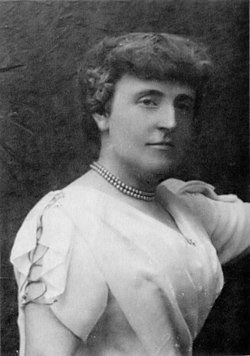
She
was an English-American novelist and playwright. She is best known for the
three children's novels Little Lord Fauntleroy (published
in 1885–1886), A Little Princess (1905), and The
Secret Garden (1911).
The
Burnetts lived for two years in Paris, where their two sons were born, before
returning to the United States to live in Washington, D.C., Burnett then began
to write novels, the first of which (That Lass o' Lowrie's), was
published to good reviews. Little Lord Fauntleroy was
published in 1886 and made her a popular writer of children's fiction, although
her romantic adult novels written in the 1890s were also popular. She wrote and
helped to produce stage versions of Little Lord Fauntleroy and A Little
Princess.
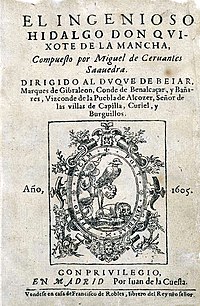
fully
titled The Ingenious Gentleman Don Quixote of La Mancha, is a Spanish novel by
Miguel de Cervantes Saavedra. Published in two volumes, in 1605 and 1615, Don
Quixote is considered the most influential work of literature from the Spanish
Golden Age and the entire Spanish literary canon.
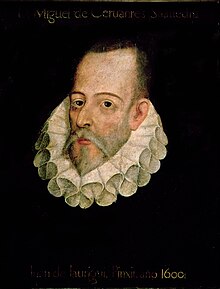
He
was a Spanish writer who is widely regarded as the greatest writer in the
Spanish language and one of the world's pre-eminent novelists.
His
major work, Don Quixote, considered to be the first modern
novel, is a classic of Western literature, and is regarded amongst the
best works of fiction ever written. His influence on the Spanish
language has been so great that the language is often called la
lengua de Cervantes ("the language of Cervantes").
spare the rod and spoil the child

2016年12月30日 星期五
Week 16
Syllabus of week 16: 👀

⏩The Adventures of Tom Sawyer by Mark Twain is an 1876 novel about a young boy growing up along the Mississippi River. It is set in the fictional town of St. Petersburg, inspired by Hannibal, Missouri, where Twain lived.

Tom
Sawyer is the embodiment of boyhood rebellion. He is always disappointing
the adults who surround him, by breaking rules, fighting with other boys,
failing to perform his chores, fibbing, stealing sweet treats from his Aunt
Polly's closet, and so on. Yet Twain's stories of Tom's misdeeds are
humorous and affectionate, rather than judgmental moral lessons.
⏩Literature realism-
Literary
realism is part of the realist art movement beginning with
mid nineteenth-century French literature(Stendhal), and Russian
literature (Alexander Pushkin) and extending to the late nineteenth and
early twentieth century. Literary realism, in contrast to idealism, attempts
to represent familiar things as they are.Realist authors chose to depict
everyday and banal activities and experiences, instead of using a romanticized
or similarly stylized presentation. Literary critic Ian Watt, however,
dates the origins of realism in United Kingdom to the early
18th-century novel.Subsequent related developments in the arts are naturalism, social
realism, and in the 1930s, socialist realism.
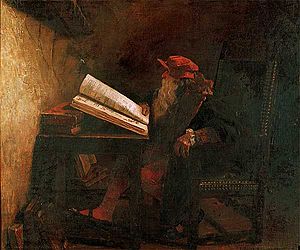
Faust is the protagonist of a classic German legend.
He is a scholar who is highly successful yet dissatisfied with his life, which
leads him to make a pact with the Devil, exchanging his soul for
unlimited knowledge and worldly pleasures. The Faust legend has been the
basis for many literary, artistic, cinematic, and musical works that
have reinterpreted it through the ages. "Faust" and the adjective "Faustian" imply
a situation in which an ambitious person surrenders moral integrity in
order to achieve power and success for a delimited term.

2016年12月23日 星期五
Week 15
Syllabus of week 15: 👀

⏩the wonderful wizard of oz: is a children's novel written by L. Frank Baum and illustrated by W. W. Denslow.
➜➜Somewhere over the rainbow
⏩good bye yellow brick road
⏩Happy Holiday (Merry Christmas)
2016年12月16日 星期五
Week 14
Syllabus of week 14: 👀

⏩Hans Christian Andersen
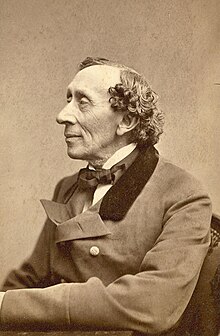
He was
a Danish author. Although a prolific writer of plays, travelogues, novels,
and poems, Andersen is best remembered for his fairy
tales. Andersen's popularity is not limited to children; his stories,
called eventyr in Danish or "fairy-tales" in English,
express themes that transcend age and nationality.
⏩fairy tale(there is happy ending): is a type of short story that typically features European folkloric fantasy characters, such as dwarves, elves, fairies, giants, gnomes, goblins, mermaids, trolls, or witches, and usually magic or enchantments. Fairy tales may be distinguished from other folk narratives such as legends (which generally involve belief in the veracity of the events described)and explicitly moral tales, including beast fables.
➜➜3 mirror
stage
reflection
self-esteem
self-confidence
is
a literary fairy tale by Hans Christian Andersen about a young woman whose
royal identity is established by a test of her physical sensitivity. The tale
was first published with three others by Andersen in an inexpensive booklet on
8 May 1835 in Copenhagen by C.A. Reitzel.

2016年12月9日 星期五
Week 13
Syllabus of week 13: 👀
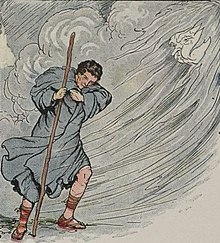
⏩north wond and sun: is one of Aesop's Fables (Perry Index 46). It is type 298 (Wind and Sun) in the Aarne-Thompson folktale classification.[1] The moral it teaches about the superiority of persuasion over force has made the story widely known. It is also the chosen text for phonetic transcriptions.

⏩ The Ass Eating Thistle

Developed
by authors during Renaissance times, the story of an ass
eating thistles was a late addition to collections of Aesop's
Fables. Beginning as a condemnation of miserly behaviour, it eventually was
taken to demonstrate how preferences differ.

It
happened that a Fox caught its tail in a trap, and in struggling to release
himself lost all of it but the stump. At first he was ashamed to show himself
among his fellow foxes. But at last he determined to put a bolder face upon
his misfortune, and summoned all the foxes to a general meeting to consider a
proposal which he had to place before them. When they had assembled together
the Fox proposed that they should all do away with their tails. He pointed
out how inconvenient a tail was when
they were pursued by their enemies, the dogs; how much it was in the way when they desired to sit down and hold a friendly conversation with one another. He failed to see any advantage in carrying about such a useless encumbrance.
"That
is all very well," said one of the older foxes; "but I do not think
you would have recommended us to dispense with our chief ornament if you had
not happened to lose it yourself."
There
was a farmer who was trapped on his country estate by a winter storm. He
didn't have any food, so first he ate his sheep, then his goats. When the
storm got worse, he even slaughtered the oxen who pulled his plow. When the
dogs saw what was happening, they said to one another, 'Let's get out of here
now! Since we can see that the master didn't even spare the oxen who labour
on his behalf, how can we expect to be spared?'
The story shows that you should especially avoid someone who does not even spare his own people.
Hansel and Gretel are a young brother and sister kidnapped by a cannibalistic witch
living deep in the forest in a house constructed of cake and confectionery. The
two children save their lives by outwitting her.
➜➜is a
well-known fairy tale of German origin, recorded by the Brothers Grimm and published in 1812. Hansel and Gretel
are a young brother and sister kidnapped by a cannibalistic witch living deep in the forest in a
house constructed of cake and confectionery. The two children save their lives by outwitting her. The tale has been adapted to various media,
most notably the opera Hänsel und Gretel (1893) by Engelbert Humperdinck and a stop-motion animated feature film
made in the 1950s based on the opera. Under the Aarne–Thompson classification system, "Hansel and Gretel" is classified
under Class 327.
|
2016年12月2日 星期五
Week 12
Syllabus of week 12: 👀

⏩maycomb

To Kill a Mockingbird is a novel by
Harper Lee published in 1960. It was immediately successful, winning the Pulitzer
Prize, and has become a classic of modern American literature. The plot and
characters are loosely based on the author's observations of her family and
neighbors, as well as on an event that occurred near her hometown in 1936, when
she was 10 years old.
➜➜the faerie queene: is an
incomplete English epic poem by Edmund Spenser. The first half was published in
1590, and a second installment was published in 1596. The Faerie Queene is
notable for its form: it was the first work written in Spenserian stanza and is
one of the longest poems in the English language.

⏩allegory: an
allegory in its most general sense is an extended metaphor. Allegory has been
used widely throughout the histories of all forms of art, largely because it
readily illustrates complex ideas and concepts in ways that are comprehensible
to its viewers, readers, or listeners. Allegories are typically used as
literary devices or rhetorical devices that convey hidden meanings through
symbolic figures, actions, imagery, and/or events, which together create the
moral, spiritual, or political meaning the author wishes to convey.
➜➜the boy crying wolf : is one of Aesop's
Fables, numbered 210 in the Perry Index. From it is derived the English idiom
"to cry wolf", meaning to give a false alarm.

訂閱:
文章 (Atom)