Syllabus of week 16: 👀

⏩The Adventures of Tom Sawyer by Mark Twain is an 1876 novel about a young boy growing up along the Mississippi River. It is set in the fictional town of St. Petersburg, inspired by Hannibal, Missouri, where Twain lived.

Tom
Sawyer is the embodiment of boyhood rebellion. He is always disappointing
the adults who surround him, by breaking rules, fighting with other boys,
failing to perform his chores, fibbing, stealing sweet treats from his Aunt
Polly's closet, and so on. Yet Twain's stories of Tom's misdeeds are
humorous and affectionate, rather than judgmental moral lessons.
⏩Literature realism-
Literary
realism is part of the realist art movement beginning with
mid nineteenth-century French literature(Stendhal), and Russian
literature (Alexander Pushkin) and extending to the late nineteenth and
early twentieth century. Literary realism, in contrast to idealism, attempts
to represent familiar things as they are.Realist authors chose to depict
everyday and banal activities and experiences, instead of using a romanticized
or similarly stylized presentation. Literary critic Ian Watt, however,
dates the origins of realism in United Kingdom to the early
18th-century novel.Subsequent related developments in the arts are naturalism, social
realism, and in the 1930s, socialist realism.
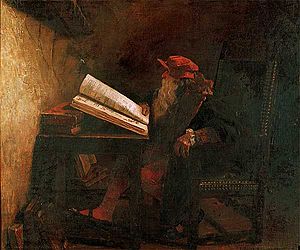
Faust is the protagonist of a classic German legend.
He is a scholar who is highly successful yet dissatisfied with his life, which
leads him to make a pact with the Devil, exchanging his soul for
unlimited knowledge and worldly pleasures. The Faust legend has been the
basis for many literary, artistic, cinematic, and musical works that
have reinterpreted it through the ages. "Faust" and the adjective "Faustian" imply
a situation in which an ambitious person surrenders moral integrity in
order to achieve power and success for a delimited term.